





QA vs QC in Pharma: The Critical Differences You Need to Know
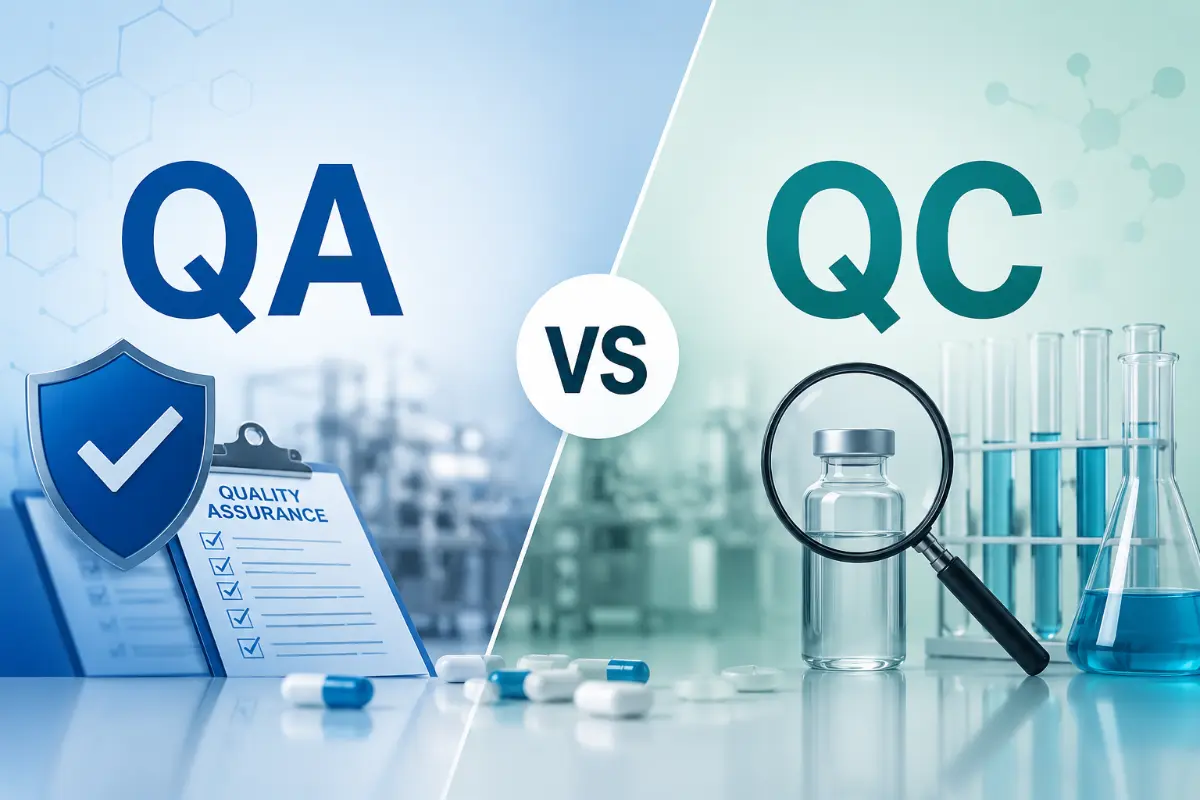
In pharmaceutical manufacturing, the word "Quality" is not just a buzzword—it is a strict regulatory mandate. However, walk into any manufacturing facility, and you will hear two terms thrown around interchangeably: Quality Assurance (QA) and Quality Control (QC). While both are critical for ensuring drug safety, they represent entirely different jobs, processes, and mindsets. Let's clear up the confusion once and for all.
Guide Sections
- 🔬 The Core Difference: Product vs. Process
- 🧪 Quality Control (QC) — Testing & Detection
- 📋 Quality Assurance (QA) — Systems & Prevention
- 📊 Quick Comparison: QA vs. QC
- 💼 Entry-Level Careers & GMP Requirements
🔬 The Core Difference: Product vs. Process
The simplest way to remember the difference between these two departments is this:
"Quality Control (QC) asks: Does this specific batch pass?
Quality Assurance (QA) asks: Why would any batch fail?"
QC is reactive. It looks at the finished product or raw materials to find defects that have already occurred. QA is proactive. It looks at the overall manufacturing processes, procedures, and documentation to build a system that prevents defects from happening in the first place.
🧪 Quality Control (QC) — Testing & Detection
Quality Control is the laboratory division. They are the scientists on the ground analyzing samples using analytical instruments to measure physical and chemical properties against strict specifications.
Core Activities in QC:
- Raw Material Testing: Analyzing chemical ingredients before they enter the manufacturing line.
- In-Process Testing: Checking samples midway through production to ensure stability.
- Analytical Techniques: Operating advanced instruments like High-Performance Liquid Chromatography (HPLC), gas chromatography, UV-Vis spectrophotometers, titration, and dissolution testing.
- Stability Testing: Storing drugs under various environmental conditions to determine their shelf life.
📋 Quality Assurance (QA) — Systems & Prevention
Quality Assurance is the systems and compliance division. Rather than working in a lab with pipettes, QA professionals work with documentation, protocols, and audits to design a production environment that is inherently low-risk.
Core Activities in QA:
- Standard Operating Procedures (SOPs): Reviewing and approving step-by-step instructions for every action in the plant.
- GMP Compliance: Ensuring the facility adheres to Good Manufacturing Practices guidelines mandated by regulators (like FDA, WHO, or local authorities).
- Deviation & CAPA: Investigating why something went wrong during production and establishing Corrective and Preventive Actions (CAPA) to prevent recurrence.
- Audits & Inspections: Performing internal inspections and hosting external regulatory agency audits.
📊 Quick Comparison: QA vs. QC
| Attribute | Quality Control (QC) | Quality Assurance (QA) |
|---|---|---|
| Focus | Product & Finished Samples | Process & Systems |
| Nature | Reactive (Detects defects) | Proactive (Prevents defects) |
| Work Environment | Analytical Lab (HPLC, Titration, Dissolution) | Office/Plant (SOPs, Audits, CAPA, Batch Records) |
| Key Question | "Does this batch meet specifications?" | "Are our procedures reliable and compliant?" |
| Role Type | Technical / Scientific execution | Administrative / Compliance oversight |
💼 Entry-Level Careers & GMP Requirements
Both QC and QA roles are widely available in every pharmaceutical manufacturing facility. Because both roles are critical to quality operations, hiring requirements for entry-level candidates share some overlap, yet diverge based on day-to-day duties.
Entering QC:
Requires strong analytical skills. Interviewers will test your knowledge on standard wet chemistry and instrumentation principles. You should understand how an HPLC works, mobile phase preparation, dilution calculations, and standard chromatography concepts.
Required: B.Pharm / B.Sc / M.Sc
Entering QA:
Requires attention to detail, documentation skills, and solid reading/writing capabilities. Interviewers will test your understanding of GMP regulations, documentation guidelines (ALCOA+), change control concepts, and standard manufacturing steps.
Required: B.Pharm / M.Pharm
Ultimately, whether you choose the hands-on laboratory environment of QC or the process-driven regulatory landscape of QA, both roles offer excellent growth pathways leading to Managerial, Auditing, and Directorship positions in the pharmaceutical industry.
Written by Pharmaceutical Compliance Specialist
Senior Career Advisor & Recruitment Specialist at JobPortalConnect. With years of experience in HR matching, they review resumes, optimize career pathways, and interview recruiting partners directly.