





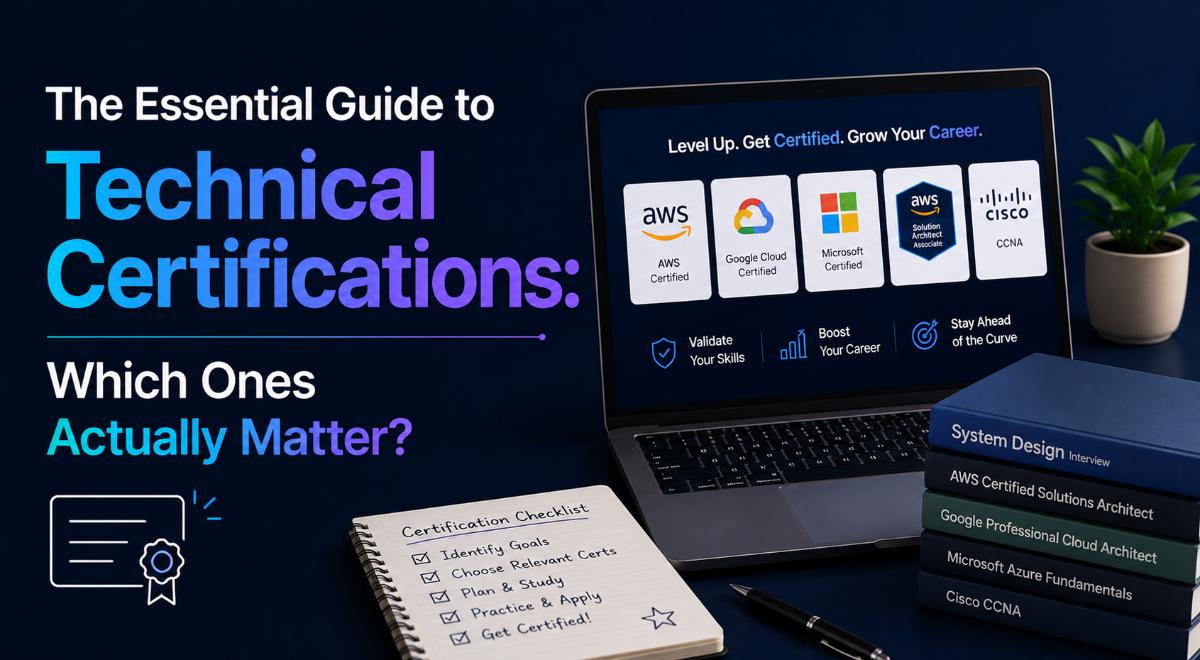
The Essential Guide to Technical Certifications: Which Ones Actually Matter?
Do Certifications Help You Get Hired?
In the technical job market, candidates are always looking for ways to stand out. Online courses frequently promote certifications as a golden ticket to landing high-paying jobs. However, not all certifications are created equal. Recruiters view some credentials as highly prestigious (because they require passing a difficult, proctored exam), while they ignore others (like certificates of completion where you just watched video tutorials). Understanding which certifications carry actual weight is essential to invest your time and money wisely.
This guide breaks down the top industry-standard certifications across Cloud Computing, Project Management, and Networking that recruiters actively look for.
1. Cloud Computing Certifications
Cloud infrastructure is the backbone of modern software. Having a cloud certification is a huge differentiator for software engineers, devops specialists, and system admins.
- AWS Certified Solutions Architect (Associate): The golden standard for cloud credentials. It proves you know how to design, deploy, and secure applications on Amazon Web Services.
- Microsoft Certified: Azure Fundamentals (AZ-900): An excellent entry-level certification for beginners to understand Azure services, security, and pricing.
2. Project Management and Agile Certifications
For non-technical candidates and managers, showing that you understand modern software delivery frameworks is essential.
- Certified ScrumMaster (CSM) or Professional Scrum Master (PSM I): These credentials prove you understand the Scrum framework and are ready to act as a Scrum Master or project manager. They are highly sought after by agile tech companies.
- PMP (Project Management Professional): The premium certification for experienced project managers, requiring 3+ years of leading projects.
3. Networking and Security Certifications
For IT support engineers, system admins, and cybersecurity analysts:
- Cisco Certified Network Associate (CCNA): The most respected entry-level networking certification, covering routing, switching, IP addressing, and network security.
- CompTIA Security+: An industry-leading baseline certification for cybersecurity professionals, proving foundational knowledge in threat management and security architecture.
Written by JobPortal Editorial Team
Senior Career Advisor & Recruitment Specialist at JobPortalConnect. With years of experience in HR matching, they review resumes, optimize career pathways, and interview recruiting partners directly.