





Over-the-Counter (OTC) Drugs: Safety, Guidelines, and Approved List
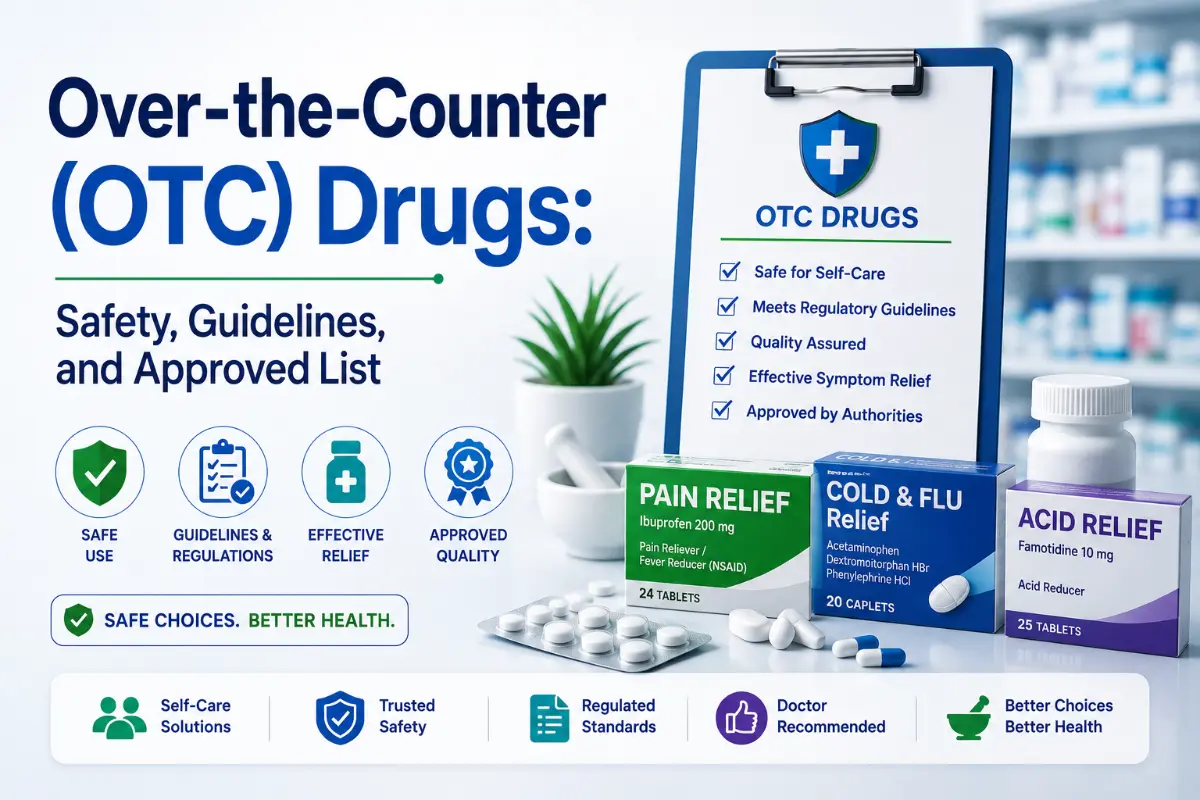
An Over-the-Counter (OTC) drug is a medicine that can be legally purchased without a doctor's prescription and used safely by following the instructions printed on the packaging label. While these medications provide convenient access to healthcare for minor ailments, "OTC" does not mean risk-free. Let's explore the guidelines, safety rules, and the complete list of 39 approved allopathic OTC drugs.
Guide Sections
- 💊 What is an OTC Drug? (OTC vs. Rx)
- ⚠️ The Safety Reality: Why OTC Isn't Risk-Free
- 📋 Categorized List of 39 Approved OTC Drugs
- 🔍 Practical OTC Safety Tips
💊 What is an OTC Drug? (OTC vs. Rx)
Over-the-Counter (OTC) drugs are medicines selected by regulatory agencies for self-medication because they have been proven safe and effective when used according to the instructions on the label. They are widely used to treat minor, self-limiting health problems such as mild pain, acidity, short-term coughs, and rehydration.
The opposite is a **Prescription Drug (Rx drug)**. Rx drugs require a written prescription from a licensed medical practitioner (doctor) before they can be dispensed by a pharmacist, usually because they have a higher potency, require monitoring, or present a risk of dependency/side effects.
⚠️ The Safety Reality: Why OTC Isn't Risk-Free
A common misconception is that because a drug is available without a prescription, it is completely harmless. However, incorrect usage can lead to severe health issues:
- Paracetamol Toxicity: Exceeding the daily limit ($> 4\text{ grams}$) can cause irreversible liver failure.
- Omeprazole Overuse: Taking proton pump inhibitors (PPIs) for extended periods without medical consultation can mask stomach ulcers and lead to bone density reduction or kidney issues.
- Drug-Drug Interactions: Combining OTC anti-allergy drugs (like chlorpheniramine) with alcohol or sedatives can cause dangerous drowsiness.
- Unnecessary Use: Taking antibiotics or specialized drugs thinking they are OTC can lead to drug resistance.
📋 Categorized List of 39 Approved Allopathic OTC Drugs
The following list represents the proposed and approved allopathic OTC drugs commonly available for self-medication:
Pain, Fever & Anti-inflammatory:
- Paracetamol (Acetaminophen) — Tablet/Syrup/Suspension/Suppository
- Diclofenac Gel — Topically for joint and muscle pain
- Methyl Salicylate Gel — Topical pain relief rub
Gastrointestinal & Rehydration:
- Omeprazole Capsule — Acid reflux & heartburn
- Antacid Chewable Tablet / Suspension — Acidity
- Milk of Magnesia Suspension — Laxative & antacid
- Oral Rehydration Salt (ORS) (Sachets) — Dehydration
- Glycerin Suppository — Constipation
- Ranitidine Tablet — Acidity (under regulatory guidelines)
Allergy & Cough:
- Chlorpheniramine Maleate Tablet/Syrup — Anti-allergy
- Dextromethorphan Syrup — Dry cough suppressant
- Promethazine Theoclate Tablet — Motion sickness
- Xylometazoline 0.1% Nasal Drops — Nasal congestion (max 5 days)
Vitamins & Minerals:
- Ascorbic Acid (Vitamin C) Chewable Tablet/Syrup
- Calcium Tablet — Mineral supplement
- Ferrous (Sulphate, Gluconate, Fumarate) — Iron supplement
- Multivitamin Tablet/Capsule/Drops
- Riboflavin Tablet (Vitamin B2)
- Vitamin A Capsule
- Vitamin B Complex (Tablet/Syrup/Drops)
Antiseptics, Ointments & Skin Care:
- Benzyl Benzoate Lotion — Treatment for scabies
- Chlorhexidine Lotion/Cream — Antiseptic skin wash
- Chloroxylenol Lotion/Cream — Disinfectant & antiseptic
- Gentian Violet — Topical antifungal liquid
- Neomycin/Gentamycin/Bacitracin Ointment/Cream/Dusting Powder
- Permethrin Ointment/Cream — Treatment for lice/scabies
- Potassium Permanganate Granules — Antiseptic gargle/wash
- Povidone Iodine — Wound disinfectant solution/ointment
- Salicylic Acid + Benzoic Acid Ointment — Antifungal ointment
- Silver Sulphadiazine Ointment — Burn wound dressing
- Sunscreen Preparations — UV protection
Infection & Respiratory:
- Chloramphenicol Eye/Ear Ointment/Drops — Bacterial eye/ear infections
- Albendazole Chewable Tablet — Deworming
- Mebendazole Tablet — Deworming
- Metronidazole Tablet/Suspension — Protozoal/bacterial infections
- Salbutamol Tablet — Bronchodilator for asthma (restricted use)
Family Planning & Hygiene:
- Low Dose Contraceptive Pills — Birth control
- Condoms — Barrier contraception & STI prevention
- Mouthwash Preparations — Oral hygiene
🔍 Practical OTC Safety Tips
1. Read the Label: Always check the dosage, active ingredients, expiration date, and warnings.
2. Avoid "Double-Dosing": Do not take two different products containing the same active ingredient (e.g. taking Paracetamol and a cold/flu syrup both containing Acetaminophen).
3. Limit Duration: If symptoms persist for more than 3-5 days, stop taking the OTC drug and consult a doctor.
4. Store Properly: Keep medicines out of reach of children and store them in a cool, dry place away from direct sunlight.
Written by Clinical Pharmacist & Consultant
Senior Career Advisor & Recruitment Specialist at JobPortalConnect. With years of experience in HR matching, they review resumes, optimize career pathways, and interview recruiting partners directly.