


How to Resign Professionally: Notice Periods and Letters
Leaving on a Positive Note
Resigning from your job is a significant career milestone. No matter what your reasons are for leaving—whether you accepted a better offer, are changing career directions, or are returning to studies—how you exit is crucial. The professional world is small, and you will need references and background checks in the future. Leaving your job professionally ensures you maintain your professional relationships and protect your reputation.
1. Talk to Your Manager First
Never let your manager find out about your resignation via email or third parties. Schedule a brief face-to-face meeting or video call to deliver the news in person:
"I have accepted a new opportunity that aligns with my career goals. I wanted to tell you personally and thank you for your mentorship and the opportunities I've had on this team."
Follow up immediately by sending your formal resignation email to HR and your manager to log the dates.
2. How to Draft a Resignation Letter
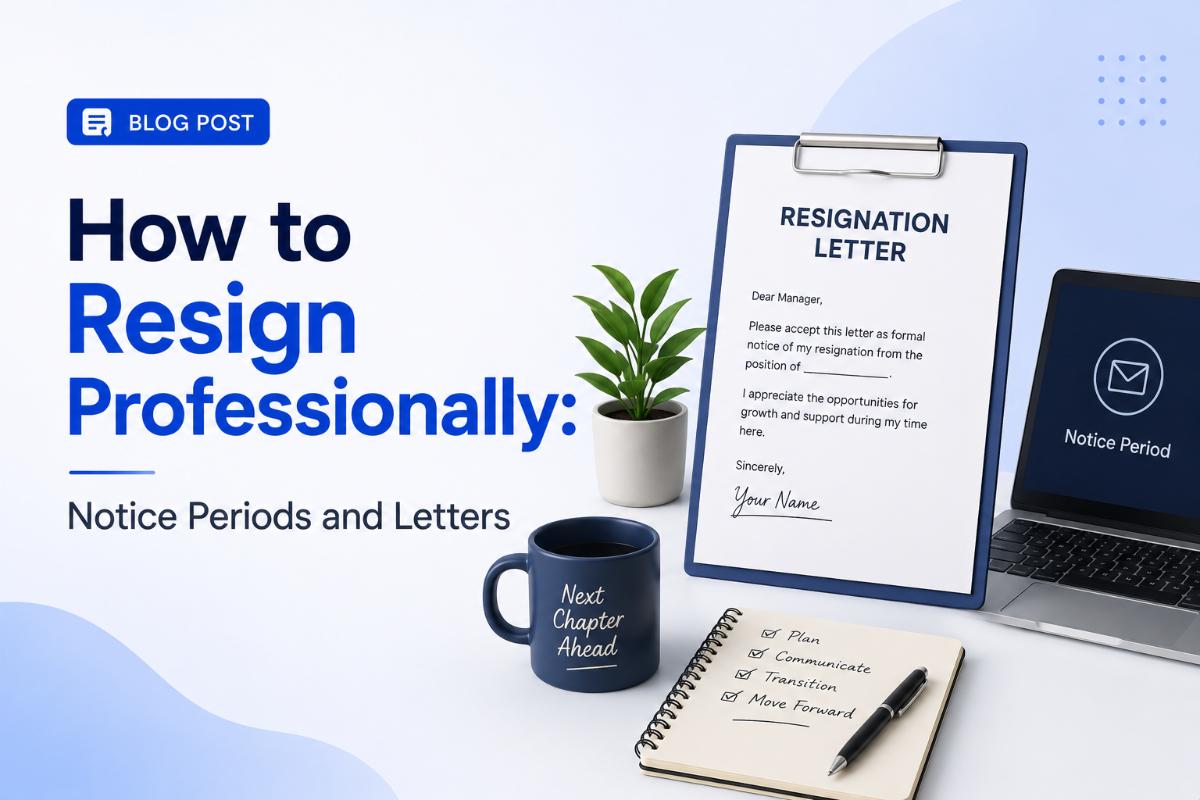
Keep your resignation letter simple, polite, and brief. Mention the position, your last working day (based on your notice period), a brief thank you, and a commitment to help with the transition.
Example Template:
"Dear [Manager's Name],
Please accept this email as formal notification that I am resigning from my position as [Job Title]. My last working day will be [Date], in accordance with my [Number] days notice period. I want to thank you for the support and guidance during my time here. I am committed to completing my current tasks and training team members to ensure a smooth transition of my responsibilities. Sincerely, [Your Name]."
3. Deliver a Smooth Transition
Your work during your notice period determines how you will be remembered. Focus on:
- Documenting your current processes, project files, and system credentials.
- Cleaning up open issues and handing over tasks to colleagues.
- Remaining polite, cooperative, and engaged until your final day.
Written by JobPortal Editorial Team
Senior Career Advisor & Recruitment Specialist at JobPortalConnect. With years of experience in HR matching, they review resumes, optimize career pathways, and interview recruiting partners directly.