




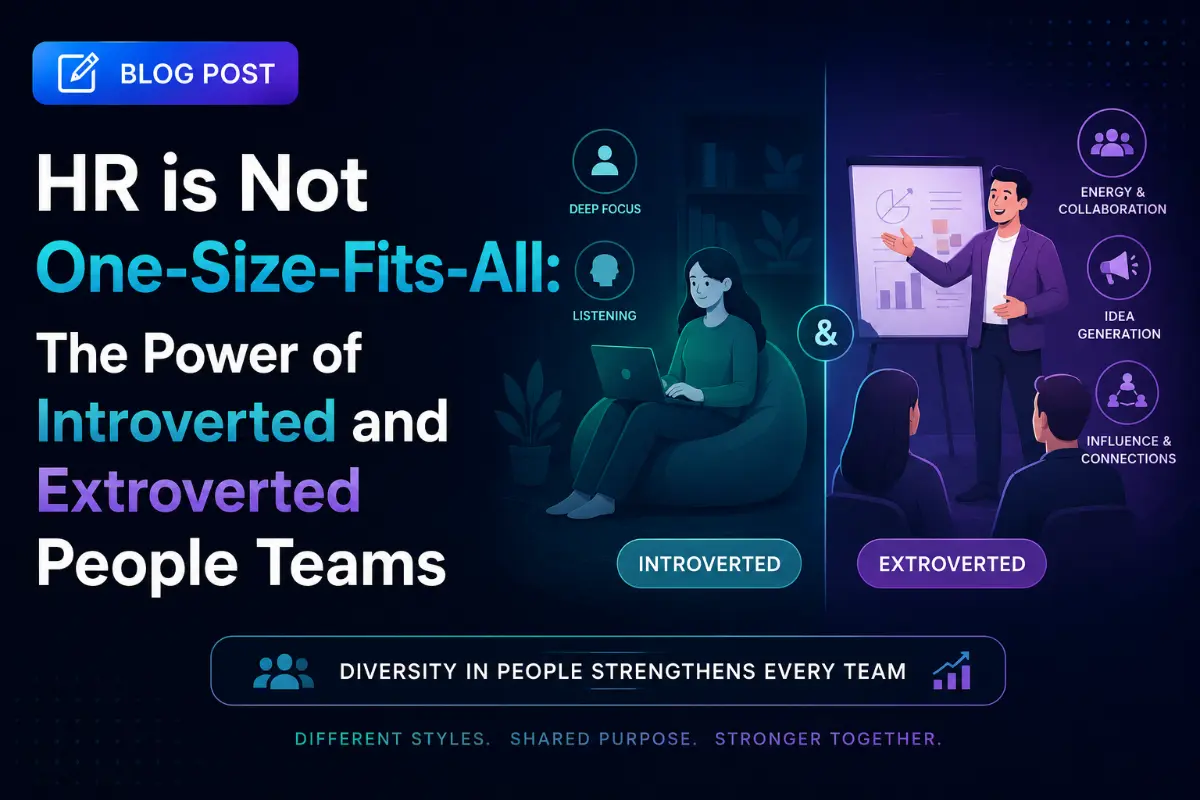
HR is Not One-Size-Fits-All: The Power of Introverted and Extroverted People Teams
When many people think of Human Resources, they picture a highly outgoing professional leading team-building exercises, facilitating workshops, or resolving interpersonal conflicts face-to-face. While this extroverted approach is valuable, it represents only one side of the coin. The reality is that HR is not one-size-fits-all. High-performing people teams require a balance: the energy of conversation and connection alongside the strength of structured planning, processes, and data-driven systems. Let's examine how both styles shape corporate culture and why you need both to build an enduring workplace.
Guide Highlights
- ⚡ Two Styles: Extrovert vs. Introvert HR
- 📊 The Six Pillars of Great HR Teams
- 🤝 Achieving Synergy in People Operations
- 📋 Actionable Tips for Building HR Teams
⚡ Extroverted vs. Introverted HR Styles
Both profiles are essential, but they contribute to an organization's culture in fundamentally different ways:
🗣️ The Extroverted HR Professional
Extroverted HR leaders bring vital energy to the workplace. They thrive on interaction, motivation, and active community-building:
- Relationship Building: Connecting with employees through direct, day-to-day conversations and open-door policies.
- Engagement Drivers: Leading company events, onboarding cohorts, training sessions, and culture initiatives.
- Conflict Resolution: Using verbal communication and empathy to de-escalate workplace issues instantly.
⚙️ The Introverted HR Professional
Introverted HR leaders build culture through structure, systems, and deep strategic focus. They excel at:
- Process Excellence: Designing clean policies, performance evaluation systems, and fair promotion metrics.
- Analytical Insights: Evaluating engagement metrics, salary market rates, retention trends, and employee data.
- Thoughtful Planning: Crafting comprehensive career pathways, compensation models, and structural frameworks.
📊 The Six Pillars of Great HR Teams
Regardless of operational style, high-performing people operations departments must excel across six core pillars:
1. Strong Communication
Providing clear, honest, and transparent communication across all organizational levels.
2. Thoughtful Planning
Structuring sustainable talent acquisition plans, onboarding flows, and growth roadmaps.
3. Employee Engagement
Ensuring employees have platforms to share voice, feel heard, and enjoy their work environment.
4. Process Improvement
Eliminating red tape, optimizing internal tooling, and simplifying administrative workflows.
5. People-First Decisions
Prioritizing employee physical and mental well-being, growth, and safety in strategic policies.
6. Culture-Building Mindset
Fostering trust, transparent feedback, inclusion, and professional growth across departments.
🤝 Achieving Synergy in People Operations
When an HR team is heavily skewed toward one style, operational gaps emerge:
- Without Conversational Energy: HR can feel cold, mechanical, and unapproachable. Policies are pristine on paper, but employees feel disconnected from leadership.
- Without Structured Processes: HR is warm and fun, but suffers from operational confusion, inconsistent evaluations, compliance risks, and rapid burnout.
The strongest organizations build diverse HR teams where loud and quiet professionals work together. A conversational HR Business Partner gathers employee sentiment on the ground, while an analytical HR Operations Manager translates those insights into systemic policy enhancements.
📋 Leadership Action Items: Designing Your HR Team
- Map Your HR Skillsets: Audit your current HR team. Are you over-indexed on events and short on process framework planning, or vice versa?
- Encourage Bidirectional Feedback: Ensure structured policy changes are run by employee-facing partners to check for real-world impact before deployment.
- Redefine the HR Role: Hire for problem-solving capacity, empathy, and logic rather than looking for a single "outgoing" personality type.
Written by VP of People Strategy
Senior Career Advisor & Recruitment Specialist at JobPortalConnect. With years of experience in HR matching, they review resumes, optimize career pathways, and interview recruiting partners directly.