





Quality Assurance (QA) in Pharma: Roles, Skills, and Interview Prep
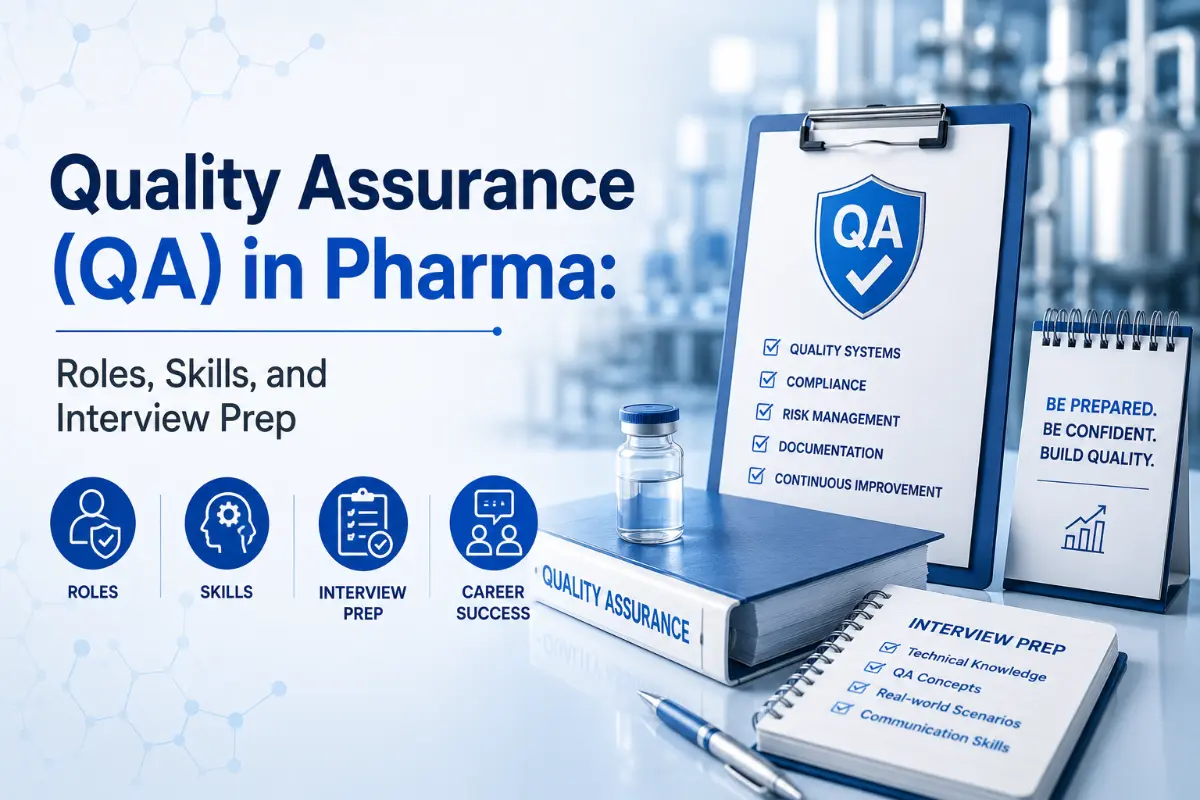
Quality Assurance (QA) is the systemic backbone of the pharmaceutical industry. While laboratory test tubes and chromatographic instruments measure chemical parameters, it is the QA department that designs the compliance frameworks, audits processes, and reviews batch records to certify that every single dose is safe, effective, and compliant. Let's explore the roles, responsibilities, essential skills, and top interview questions for QA professionals.
Guide Sections
- 🔒 What is Quality Assurance (QA)?
- 📋 Key Responsibilities of QA
- 🔬 QA vs. QC Comparison
- ⚡ Essential Skills for QA
- 💼 Top 10 QA Interview Questions (With Answers)
🔒 What is Quality Assurance (QA)?
Quality Assurance (QA) is a wide-ranging concept covering all matters that individually or collectively influence the quality of a product. It is the sum total of the organized arrangements made with the object of ensuring that pharmaceutical products are of the quality required for their intended use.
In short, QA focuses on process quality. It is proactive and preventative, aiming to optimize manufacturing systems so that errors and failures do not happen in the first place.
📋 Key Responsibilities of QA
The daily tasks of a Quality Assurance professional in a pharmaceutical plant are administrative, audit-oriented, and investigative. Their core responsibilities include:
- Documentation Review: Writing, reviewing, and approving Standard Operating Procedures (SOPs), Batch Manufacturing Records (BMRs), Batch Packaging Records (BPRs), and validation protocols.
- Investigation Management: Directing and reviewing investigations for deviations, Out of Specification (OOS) results, and customer complaints.
- CAPA Implementation: Enforcing Corrective and Preventive Actions (CAPA) to resolve quality defects and prevent their recurrence.
- Change Control Management: Evaluating, approving, and tracking any changes proposed to raw materials, machinery, software, or manufacturing processes.
- GMP Audits: Conducting self-inspections (internal audits) of the manufacturing facilities and auditing external vendors/raw material suppliers.
- Training Programs: Designing and monitoring GMP and SOP training schedules for plant operators, laboratory analysts, and staff.
- Batch Release: Conducting the final review of all batch documentation and analytical results to authorize product release for commercial market sale.
🔬 QA vs. QC
While both departments exist to protect drug quality, they have different methods and focuses:
QA (Quality Assurance)
- Focuses on the **Process**
- Proactive / Preventative
- Builds the quality management system
- Administrative/Audit activities
- Audits, SOPs, CAPA, Batch records
QC (Quality Control)
- Focuses on the **Product**
- Reactive / Analytical
- Tests and measures physical/chemical attributes
- Laboratory testing execution
- HPLC, Titration, UV, Dissolution
⚡ Essential Skills for QA Professionals
A successful QA officer must possess a balance of regulatory knowledge and behavioral traits, including:
- GMP & Regulatory Knowledge: Deep understanding of FDA, EMA, WHO, and local GMP rules.
- Documentation Skills: Excellent technical writing capability for SOPs and reports.
- Audit Handling: Ability to host inspections and perform professional audits.
- Investigation & Root Cause Analysis: Knowledge of tools like Ishikawa (Fishbone) and 5 Whys.
- Communication Skills: Collaborating across departments to enforce standards.
- Attention to Detail: Spotting tiny errors in batch records containing hundreds of pages.
- Problem-Solving Ability: Formulating CAPA solutions for complex deviations.
- Data Integrity Awareness: Ensuring compliance with ALCOA+ principles.
💼 Top 10 QA Interview Questions (With Answers)
1. What is Quality Assurance?
Answer: Quality Assurance is a proactive, systems-oriented framework of procedures and activities designed to ensure that pharmaceutical products are consistently manufactured and controlled to meet their intended specifications, GMP rules, and registration authorizations.
2. What is GMP?
Answer: Good Manufacturing Practices (GMP) are the regulatory guidelines that establish minimum quality requirements for pharmaceutical manufacturing, ensuring that medicines are consistently produced, traceably documented, and safe for clinical use.
3. What is CAPA?
Answer: Corrective and Preventive Action. **Corrective Action** is the immediate step taken to eliminate the root cause of an existing deviation or defect. **Preventive Action** is the systemic adjustment implemented to prevent the future occurrence of similar defects.
4. What is a Deviation?
Answer: A deviation is any unplanned or unexpected departure from an approved Standard Operating Procedure (SOP), validation protocol, master batch record, or established manufacturing specification.
5. What is Change Control?
Answer: A formal, documented, and pre-approved process used to propose, evaluate, review, and authorize any modifications to raw materials, product formulations, manufacturing facilities, software, or test methods to ensure they do not negatively impact product safety or efficacy.
6. What is Data Integrity?
Answer: Data Integrity is the practice of ensuring that all laboratory and manufacturing data remains complete, consistent, accurate, and secure throughout its entire lifecycle, adhering to the ALCOA+ principles.
7. What is OOS?
Answer: Out of Specification (OOS) refers to any test result generated by the Quality Control laboratory that falls outside the defined acceptance criteria or regulatory limits documented in the drug monograph or registration files.
8. What is a Self-Inspection?
Answer: A self-inspection (or internal audit) is a regular, structured audit conducted by qualified internal QA team members to evaluate the facility's compliance with GMP guidelines and identify potential areas of quality system improvement.
9. What is GDP?
Answer: Good Documentation Practices (GDP) are the strict recording guidelines that ensure all documentation is complete, legible, contemporaneous, accurate, and attributable, serving as legal and scientific evidence of manufacturing events.
10. Why do you want to work in Quality Assurance?
Answer: I want to work in QA because it is the department responsible for patient safety and systemic reliability. A career in QA allows me to analyze processes, enforce compliance, handle audits, and contribute to continuous improvement, ensuring that every batch released is of the highest quality standards.
"Quality is never an accident; it is the result of disciplined processes, compliance, and continuous improvement."
Written by QA Lead & Regulatory Consultant
Senior Career Advisor & Recruitment Specialist at JobPortalConnect. With years of experience in HR matching, they review resumes, optimize career pathways, and interview recruiting partners directly.