





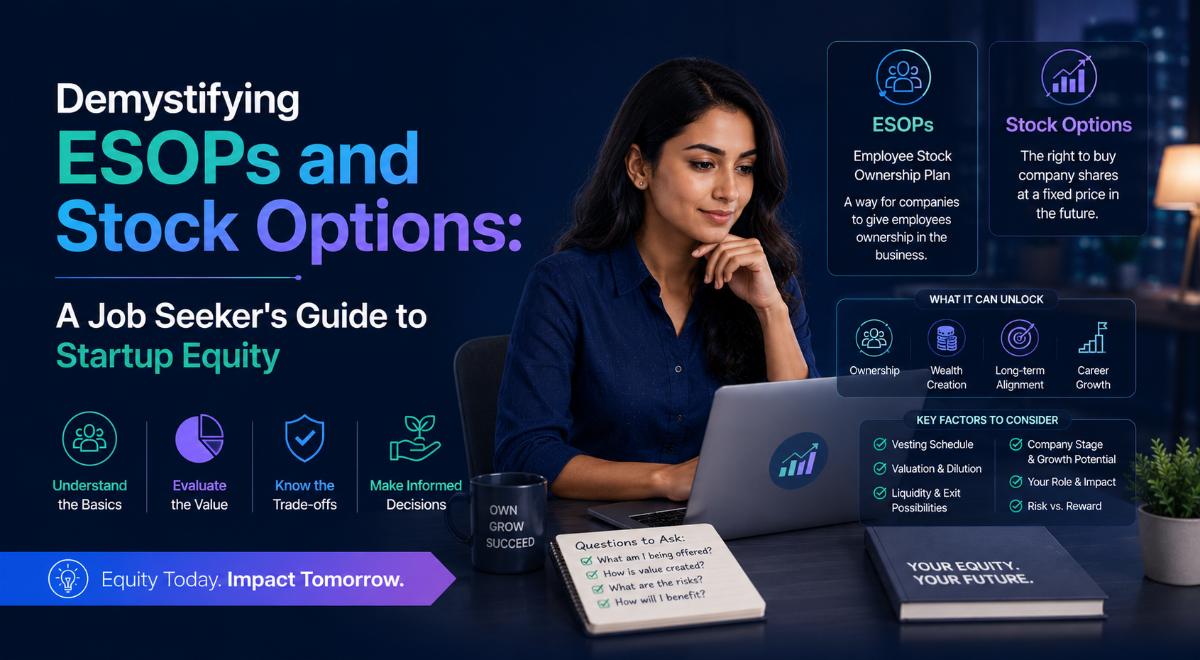
Demystifying ESOPs and Stock Options: A Job Seeker's Guide to Startup Equity
Understanding Beyond the Base Salary
When you receive a job offer from a tech startup, the compensation package often includes two main parts: a base salary and equity (stock options or ESOPs). While the base salary is simple to understand, equity packages can feel confusing. Recruiter pitches like *"We are offering you 10,000 stock options"* sound impressive, but without understanding the financial details, you might be accepting something worth far less than you think. Understanding startup equity is crucial to evaluating and negotiating job offers effectively.
This guide explains the most important terms you need to know: ESOPs, vesting schedules, cliff periods, and how to assess the real value of equity.
What is an ESOP?
An Employee Stock Ownership Plan (ESOP) gives you the right to purchase a specific number of shares in the company at a set price, known as the Strike Price (or Exercise Price). The strike price is typically set much lower than the fair market value. The goal is that as the company grows, the value of the shares increases, allowing you to sell them later for a profit.
The Vesting Schedule and Cliff Period
You do not receive all your stock options on day one. You must earn them over time, which is managed by a **Vesting Schedule**.
- Vesting Period: The total time required to earn all your options (usually 4 years). For example, a 4-year vesting schedule means you earn 25% of your options each year.
- The Cliff: A probationary period (usually 1 year) before any options vest. If you leave the company before the 1-year mark, you get 0% of your options. Once you pass the 1-year cliff, your options begin to vest monthly or quarterly.
Three Questions to Ask the Recruiter About Equity
To determine the actual value of an equity offer, ask the recruiter these questions:
- "What is the estimated current valuation of these options?" (Knows the current worth of the shares).
- "What percentage of the company do these options represent?" (Option counts like 10,000 don't matter unless you know the total outstanding shares).
- "What is the strike price?" (Determines how much it will cost you to buy the shares when you exercise them).
Written by JobPortal Editorial Team
Senior Career Advisor & Recruitment Specialist at JobPortalConnect. With years of experience in HR matching, they review resumes, optimize career pathways, and interview recruiting partners directly.