





Understanding QMS in Pharmaceuticals: The Core Pillars of Compliance
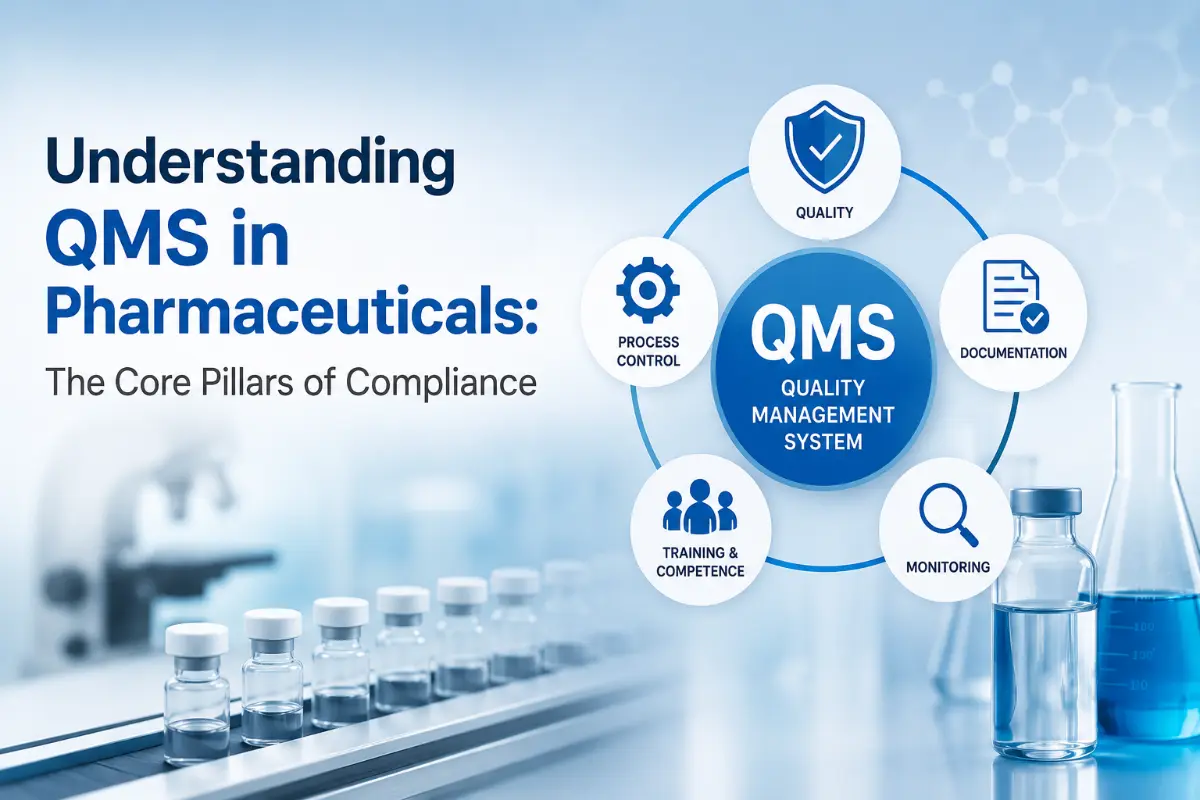
In the pharmaceutical industry, quality is not a static endpoint—it is a continuous commitment. Every single tablet, capsule, and vial distributed to patients must be identical in potency, purity, and safety. The framework that guarantees this level of perfection is the Quality Management System (QMS). But what exactly is a QMS, why is it so strictly regulated, and what are its core components? Let's explore.
Guide Sections
- 🔒 What is a QMS in Pharma?
- 🛡️ Strict GxP Regulatory Standards
- ⚡ The 6 Core Components of a Pharma QMS
- 💡 Why QMS Matters to Patients & Businesses
- ✍️ Final Takeaway: Patient Safety in Writing
🔒 What is a QMS in Pharma?
A Quality Management System (QMS) in pharmaceuticals is a comprehensive, formalized framework of processes, policies, and procedures designed to ensure that medicinal products are consistently manufactured, controlled, and traceably verified to meet their intended use and regulatory standards.
In pharma, QMS is the foundation that ensures every drug is:
- Safe for Patients: Free from cross-contamination, incorrect active pharmaceutical ingredients (APIs), or deterioration.
- Effective: Consistently active and therapeutically viable to perform its intended medical action.
- Consistently Manufactured: Replicated precisely across batches, regardless of changes in operator shifts or machinery.
- Fully Traceable: Trackable down to the exact batch of raw chemical ingredients, manufacturing equipment history, and final distribution channels.
🛡️ Strict GxP Regulatory Standards
Unlike other manufacturing domains where quality is monitored voluntarily or under basic ISO standardizations, the pharmaceutical industry operates under strict, legally enforced GxP regulations. The QMS in pharma must comply with:
- Good Manufacturing Practice (GMP): Ensures products are consistently produced according to quality standards.
- Good Laboratory Practice (GLP): Governs the non-clinical safety studies and analytical lab operations.
- Good Distribution Practice (GDP): Governs the distribution and temperature-controlled storage of drugs.
These practices are strictly enforced by global regulatory bodies such as the Food and Drug Administration (FDA) in the United States, the European Medicines Agency (EMA) in Europe, and the World Health Organization (WHO) globally. Failing to adhere to these rules results in severe penalties, warning letters, and shutdown of manufacturing units.
⚡ The 6 Core Components of a Pharma QMS
A functional and compliant QMS consists of several interconnected modules. The six most critical components include:
1. Change Control
What it does: Assesses the risk and impact of any proposed change to equipment, raw materials, supplier profiles, test procedures, or processes before it is implemented. Change Control ensures changes do not introduce unintended side effects to drug quality.
2. Corrective and Preventive Actions (CAPA)
What it does: When a defect occurs, CAPA is triggered. It involves conducting a thorough investigation to identify the root cause of the error (Corrective Action) and altering processes or equipment to guarantee it can never happen again (Preventive Action).
3. Deviation Management
What it does: A deviation is any unexpected event or departure from an approved procedure during manufacturing or testing. All deviations must be documented, rated by severity (Minor, Major, Critical), and investigated thoroughly before the batch can be released.
4. Supplier Qualification
What it does: Ensures that raw active ingredients, excipients, and primary packaging materials are sourced only from approved, GMP-certified suppliers. Regular supplier audits are conducted to verify compliance.
5. Document Management
What it does: Pharma operates under the rule: "If it is not documented, it did not happen." Every manufacturing step must have complete, auditable batch records, logbooks, and standard operating procedures (SOPs) following ALCOA+ principles (Attributable, Legible, Contemporaneous, Original, Accurate).
6. Training Management
What it does: Ensures every lab analyst, operator, and supervisor in the facility has completed required training, read active SOPs, and is legally qualified to execute their specific job duties.
💡 Why QMS Matters to Patients & Businesses
Implementing a comprehensive QMS is legally required, but it also carries massive business and patient benefits:
Patient Safety
Prevents dangerous occurrences of cross-contamination, microbial ingress, or incorrect active ingredients, ensuring patient therapy is always reliable.
Regulatory Approval
No QMS means no license to operate. A robust QMS guarantees successful regulatory inspections and steady market authorization.
Batch Consistency
Minimizes batch failures and manufacturing interruptions. Every single tablet produced is identical to the validated standard.
Recall Readiness
In the rare event of a product issue, a QMS tracks the affected batches down to the specific retail stores and patients in a matter of minutes, saving lives.
✍️ Final Takeaway: Patient Safety in Writing
A common misconception is that a Quality Management System is just administrative bureaucracy. However, in the pharmaceutical sector, a QMS represents patient safety in writing. It ensures that science, engineering, and manufacturing work in perfect alignment to deliver life-saving medications safely and effectively.
Written by Regulatory Compliance Lead
Senior Career Advisor & Recruitment Specialist at JobPortalConnect. With years of experience in HR matching, they review resumes, optimize career pathways, and interview recruiting partners directly.