



Why Highly Qualified Candidates Get Rejected: 10 Common Interview Red Flags
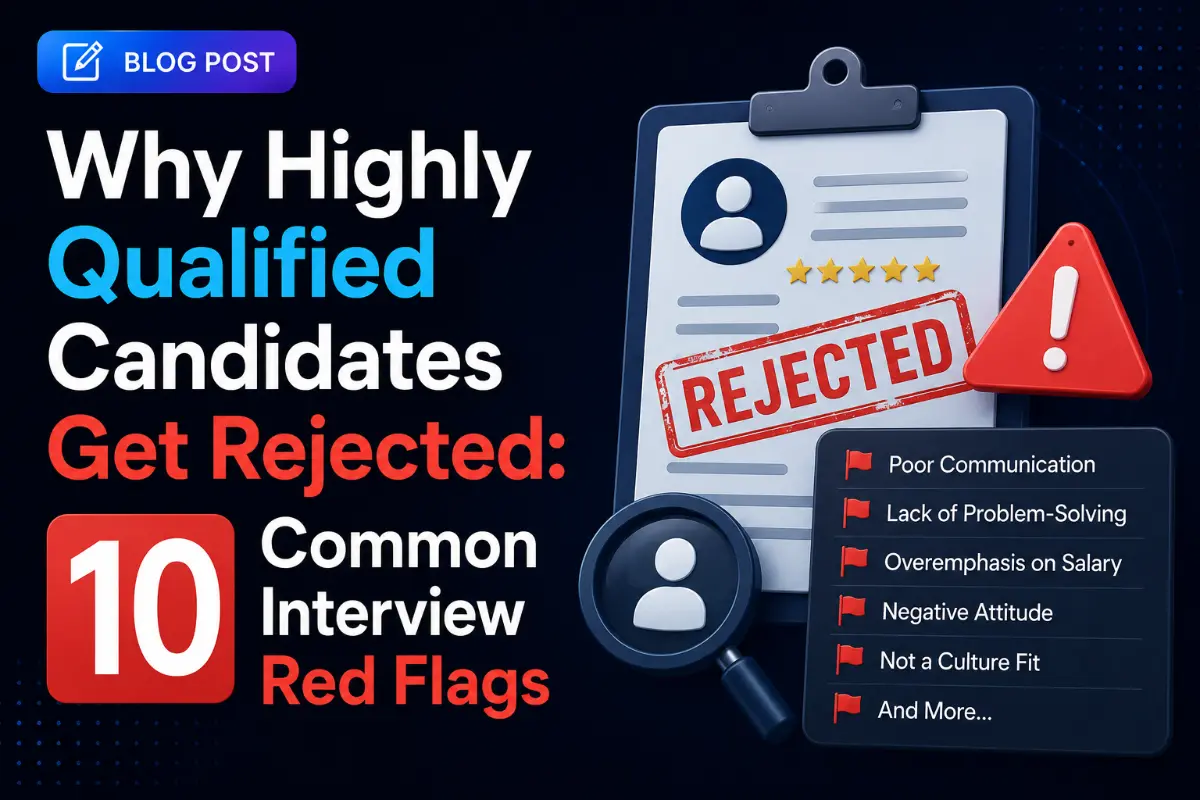
Receiving a rejection email after a job interview is one of the most frustrating parts of the job search. However, getting rejected doesn't always mean you are unqualified. In fact, many highly skilled, experienced candidates are passed over due to small, easily rectifiable mistakes made during the interview process. In this guide, we will analyze the top 10 reasons candidates get rejected, look at some less obvious red flags, and provide an actionable strategy to turn your next interview into an offer.
Guide Sections
- ⚠️ The 10 Common Rejection Reasons
- 🔍 Unseen Red Flags: Cultural & Team Fit
- 💻 Virtual Interview Etiquette (The 2026 Standard)
- 💼 Pre- & Post-Interview Checklist
⚠️ The 10 Most Common Rejection Reasons
Let's break down the common pitfalls that recruiters and hiring managers identify during candidate evaluations:
1. Lack of Preparation
The Mistake: Going into an interview without reading the company's website, research products, or thoroughly reviewing the job description.
How to fix it: Spend at least 1 hour researching the company. Understand their business model, their competitors, and prepare a short answer for why you want to work *there* specifically.
2. Poor Communication Skills
The Mistake: Speaking too quickly, rambling without answering the core question, or giving one-word answers.
How to fix it: Use the STAR Method (Situation, Task, Action, Result) to structure your answers, keeping your responses between 2 and 3 minutes.
3. A Weak or Unrefined Resume
The Mistake: Committing spelling errors, having cluttered formatting, or listing generic job duties instead of quantifiable achievements.
How to fix it: Focus on achievements rather than tasks. Instead of writing "Responsible for managing a project", write "Led a team of 5 to launch product X, resulting in a 20% increase in user retention."
4. Arriving Late
The Mistake: Showing up late to a physical or virtual interview. This signals poor time management and disinterest.
How to fix it: Plan to arrive 10 minutes early. For virtual calls, check your link and login systems 15 minutes before the scheduled time.
5. Lack of Professional Confidence
The Mistake: Hesitant speech patterns, avoiding eye contact, or underselling your skills due to nerves.
How to fix it: Prepare and practice common answers out loud. Remember that the interviewer wants you to succeed—they are looking for a solution to their hiring challenge.
6. Inability to Explain Real-World Skill Application
The Mistake: Having a long list of technical skills on your resume but failing to explain how you have applied them to solve actual business problems.
How to fix it: Prepare 3 to 4 detailed stories from your career history where you encountered a challenge, applied your skills, and generated a positive outcome.
7. Negative Attitude / Talking Bad About Past Roles
The Mistake: Criticizing your former manager, company, or colleagues. Interviewers assume that if you talk badly about others, you will do the same to them.
How to fix it: Reframe negative experiences positively. Instead of "My last company was disorganized", say "I am looking for a structured environment where I can focus on scaling systems."
8. Closed or Disengaged Body Language
The Mistake: Slouching, avoiding eye contact, crossing arms, or appearing distracted.
How to fix it: Keep an open, upright posture. Nod to show active listening, and look directly at your camera/interviewer when speaking.
9. Failing to Ask Thoughtful Questions
The Mistake: Saying "No, I don't have any questions" at the end of the interview. This signals low interest.
How to fix it: Prepare 2 or 3 questions about team culture, business challenges, or upcoming projects. For example: "What does success look like in this role in the first 90 days?"
10. Poor Role / Skill Alignment
The Mistake: Applying for roles where your experience level doesn't align with the requirements, resulting in a mismatch.
How to fix it: Read the job description details carefully. Apply for roles where you meet at least 70% of the core criteria, and customize your resume to address those needs.
🔍 Unseen Red Flags: Cultural & Team Fit
In many hiring loops, candidates pass the technical requirements but still get rejected. This often comes down to "Cultural Fit" or collaborative capability. Recruiters look for indicators of how you work with others:
- The "Hero" Complex: Taking all credit for successful team outcomes. Emphasize collaborative victories using "We" alongside individual actions ("I").
- Lack of Adaptability: Showing resistance to changing requirements or feedback. Highlight instances where you adjusted your plans based on new inputs.
- Poor Active Listening: Interrupting the interviewer or answering a different question than the one asked. Take a brief pause before responding to organize your thoughts.
💻 Virtual Interview Etiquette (The 2026 Standard)
With remote interviews as the primary format, your screen setup is your first impression. Technical issues can disrupt the flow of an interview:
- Lighting & Camera Angle: Ensure your light source is in front of you (not behind you, which casts shadows). Position the camera at eye level.
- Audio Integrity: Use headphones with a high-quality microphone to prevent echo. Test your sound output in advance.
- Stable Internet Connection: If your Wi-Fi is unstable, use a wired ethernet connection or position yourself near the router to avoid call drops.
💼 Pre- & Post-Interview Checklist
| Phase | Action Items |
|---|---|
| 24 Hours Before | - Research the company's mission, products, and recent updates. - Prepare 3-4 structured STAR stories. - Test your virtual setup (camera, microphone, and software updates). |
| 15 Minutes Before | - Clear your background and eliminate distractions. - Have a notebook, pen, and a glass of water nearby. - Log in to the meeting room early to verify the connection. |
| During | - nod to show active listening. - Use structural pauses before answering complex questions. - Ask your pre-prepared questions at the end. |
| 24 Hours After | - Send a brief thank-you email to the interviewers. - Review your performance and note questions that felt difficult. |
Written by Senior Talent Acquisition Partner
Senior Career Advisor & Recruitment Specialist at JobPortalConnect. With years of experience in HR matching, they review resumes, optimize career pathways, and interview recruiting partners directly.